
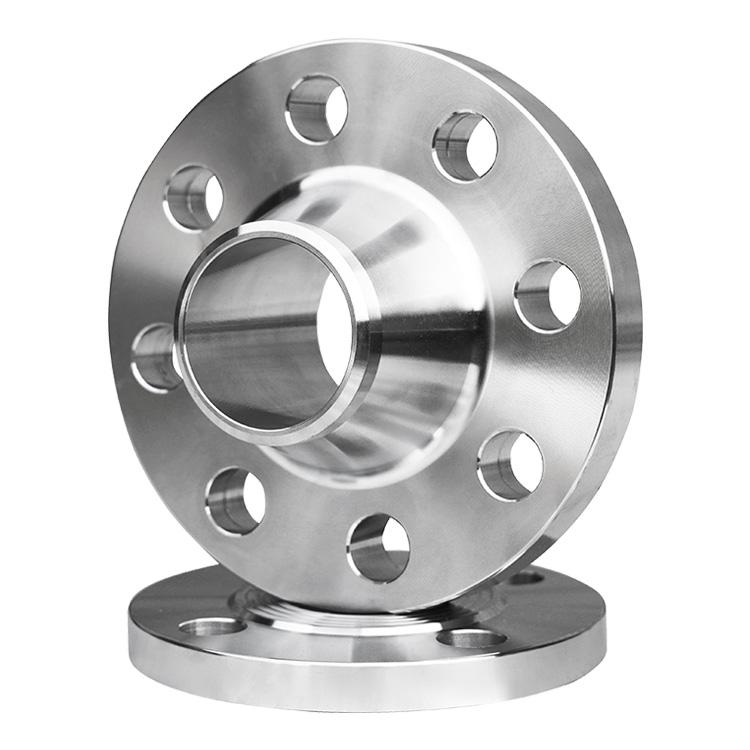
A custom industrial flange is a precision-engineered connection component used in piping systems, pressure vessels, mechanical assemblies, and large-scale fabrication projects where standard parts do not fully meet design, performance, or dimensional requirements. In engineering fabrication projects, custom flanges are selected to support safe assembly, reliable sealing, structural stability, and long-term service performance under demanding operating conditions. Because industrial systems often involve unique layouts, high pressure, high temperature, corrosive media, or special equipment interfaces, custom flange solutions play an important role in modern industrial design.
This guide provides SEO-friendly, industry-focused information about custom industrial flanges for engineering fabrication projects. It covers definitions, common materials, flange types, design advantages, production considerations, inspection methods, application environments, and specification details. The content is written in plain English and structured for easy placement into a blog post, category page, or industrial service page.
A custom industrial flange is a specially manufactured flange designed to match a project’s exact technical requirements. Unlike standard flange products that follow common size tables and fixed dimensions, a custom flange can be produced with modified bore sizes, bolt patterns, facing types, thicknesses, hub profiles, and material grades. This flexibility is especially useful in engineering fabrication projects where standard components may not align with system design or operating constraints.
In simple terms, a flange is a mechanical connector used to join pipes, valves, pumps, tanks, and other equipment. It usually connects through bolts and a gasket to create a secure and sealed joint. A custom industrial flange improves compatibility when systems involve unusual pipe diameters, non-standard equipment interfaces, space limitations, or specialized pressure and temperature ratings.
Custom flanges are used across industries such as oil and gas, petrochemical processing, power generation, shipbuilding, water treatment, mining, food processing, and heavy machinery fabrication. Their purpose is not only to connect components but also to support system reliability, simplify installation, and reduce engineering risks.
Engineering fabrication projects often require precision, adaptability, and compliance with technical standards. Standard flange sizes and designs may work for common systems, but many industrial projects need a custom industrial flange to meet project-specific conditions. This is particularly true where equipment is imported, legacy systems must be retrofitted, or the design includes unusual pressure, vibration, or corrosive exposure.
A custom flange helps engineers solve problems such as dimensional mismatch, sealing failure, misalignment, and inadequate load handling. By tailoring the flange to the project, fabricators can improve assembly efficiency, reduce field modifications, and increase the overall service life of the system.
In large-scale fabrication, even a small deviation in flange dimensions can lead to installation delays or mechanical stress. Custom industrial flanges reduce these risks by ensuring that the connection point matches the exact requirements of the project drawing and operating environment.
| Benefit | How It Helps Engineering Fabrication Projects |
|---|---|
| Exact dimensional fit | Matches project drawings, equipment interfaces, and piping layouts with minimal field adjustment. |
| Improved sealing performance | Supports gasket integrity and helps reduce leakage in high-pressure or high-temperature systems. |
| Material flexibility | Allows selection of carbon steel, stainless steel, alloy steel, duplex steel, or specialty materials. |
| Better load distribution | Helps transfer mechanical loads more effectively across bolted joints and connected components. |
| Corrosion resistance options | Enables use in aggressive environments such as chemical plants, marine systems, and wastewater facilities. |
| Project-specific design | Supports unique pressure classes, face types, and connection geometries for special applications. |
| Reduced installation time | Minimizes on-site modification, making assembly faster and more efficient. |
| Long service life | Enhances durability when manufactured and installed correctly according to application needs. |
These advantages make the custom industrial flange a valuable component in fabrication projects that require both engineering precision and operational reliability.
Custom flanges are used wherever industrial systems need secure, maintainable, and sealed joints. Their role is especially important in fabrication projects where standard connection parts do not fit the system requirements.
| Industry / Application | Typical Use of Custom Industrial Flange |
|---|---|
| Oil and gas | Pipeline connections, pressure equipment, offshore assemblies, and processing systems. |
| Petrochemical | Flanged joints for corrosive fluids, reactors, separators, and process piping. |
| Power generation | Steam systems, cooling circuits, boiler connections, and turbine support systems. |
| Water treatment | Pipe connections, pump stations, filtration systems, and chemical dosing lines. |
| Shipbuilding | Marine piping, ballast systems, fuel lines, and onboard mechanical installations. |
| Mining | Slurry lines, process piping, heavy-duty mechanical assemblies, and abrasion-prone systems. |
| Food and beverage | Sanitary equipment interfaces, clean process lines, and hygienic fabrication projects. |
| General industrial fabrication | Custom machines, skids, tanks, frames, and process modules. |
In every one of these sectors, the custom industrial flange contributes to better system integration and stronger mechanical performance.
Custom flanges can be manufactured in many formats depending on the project design and operational demands. Below are the most common flange types used in engineering fabrication projects.
| Flange Type | Main Features | Typical Use |
|---|---|---|
| Weld Neck Flange | Has a long tapered hub that improves stress distribution. | High-pressure and high-temperature piping systems. |
| Slip-On Flange | Slides over the pipe and is welded in place. | General-purpose industrial systems with moderate loads. |
| Blind Flange | Solid flange used to close off the end of a pipe or vessel opening. | Pressure testing, maintenance isolation, and system closure. |
| Socket Weld Flange | Accepts pipe into a socket and is welded around the outside. | Small-diameter, high-pressure piping applications. |
| Threaded Flange | Connects without welding, using internal threads. | Low-welding environments and smaller piping systems. |
| Lap Joint Flange | Used with a stub end, allowing easier alignment and maintenance. | Frequent disassembly or corrosion-sensitive systems. |
| Orifice Flange | Designed for flow measurement and instrumentation. | Process control and metering applications. |
| Specialty Custom Flange | Made to match non-standard shapes, bolt patterns, or equipment interfaces. | Custom fabrication, retrofits, and unique engineering designs. |
A custom industrial flange may combine features from different flange styles to achieve the right fit and performance for a specific fabrication project.
Material selection is one of the most important decisions in custom flange fabrication. The right material improves strength, corrosion resistance, temperature resistance, and compatibility with the working fluid or environment.
| Material | Key Properties | Common Application Notes |
|---|---|---|
| Carbon Steel | Strong, economical, and widely available. | Suitable for many general industrial and structural applications. |
| Stainless Steel | Good corrosion resistance and clean surface performance. | Used in chemical, food, marine, and hygienic environments. |
| Alloy Steel | Improved strength and temperature resistance. | Useful for demanding mechanical and pressure systems. |
| Duplex Stainless Steel | High strength and strong resistance to chloride corrosion. | Suitable for marine, offshore, and aggressive chemical environments. |
| Nickel Alloys | Excellent resistance to heat and corrosive media. | Applied in severe service and specialized process conditions. |
| Aluminum | Lightweight and corrosion resistant in specific environments. | Used in lighter-duty assemblies and weight-sensitive systems. |
| Cast Iron | Rigid and cost-effective in some low-pressure systems. | Used where high corrosion or impact resistance is not the primary requirement. |
Selecting the correct material for a custom industrial flange depends on pressure rating, temperature range, corrosion exposure, maintenance requirements, and project budget.
Designing a custom flange requires close attention to technical details. Every dimension and specification can affect assembly, sealing, and operating safety. Engineers typically evaluate the following factors before final production.
A successful custom industrial flange design balances performance, manufacturability, and compliance with project standards.
The table below summarizes common specification parameters for custom industrial flanges used in engineering fabrication projects. Actual values depend on project requirements and design standards.
| Specification Item | Typical Options / Notes |
|---|---|
| Nominal size | Custom sizes can be made to match non-standard piping or equipment interfaces. |
| Pressure class | Common classes include low, medium, and high pressure ratings depending on standard. |
| Face type | Raised face, flat face, ring type joint, male and female, or custom face geometry. |
| Bolt hole arrangement | Modified hole count, diameter, or bolt circle dimensions if required by the project. |
| Thickness | Can be increased for additional strength or special operating conditions. |
| Surface finish | Machined finish, smooth finish, or special sealing surface quality. |
| Heat treatment | Optional for strength improvement, stress relief, or property control. |
| Certification | May include material traceability, inspection reports, and test documentation. |
| Coating or protection | Paint, galvanizing, anti-corrosion coating, or special protection systems. |
These specification points help define a custom industrial flange for fabrication, procurement, and quality control purposes.
The manufacturing process for a custom industrial flange depends on the material, size, performance requirement, and production standard. In many cases, the process begins with engineering drawings and technical review. After dimensions and material are confirmed, the flange may be forged, machined from plate, cut from bar stock, or produced using a combination of fabrication steps.
Typical production stages include raw material selection, cutting, forming, machining, drilling, facing, heat treatment if needed, cleaning, marking, and final inspection. For highly demanding applications, additional testing may be performed to verify mechanical properties and dimensional accuracy.
The quality of a custom industrial flange depends heavily on process control. Accurate machining of the bolt circle, flatness of the face, hole alignment, and bore concentricity are all essential to proper field performance.
Quality control is critical in flange fabrication because the flange is part of a pressure-containing or load-bearing system. Even minor defects can affect sealing performance or structural safety. Common inspection methods include:
| Inspection Method | Purpose |
|---|---|
| Dimensional inspection | Checks overall size, thickness, bolt circle, bore, and hole alignment. |
| Visual inspection | Identifies surface defects, machining marks, cracks, or obvious inconsistencies. |
| Material verification | Confirms that the correct grade and heat number are used. |
| Non-destructive testing | May include ultrasonic, magnetic particle, dye penetrant, or radiographic testing. |
| Surface finish check | Ensures the sealing face meets the required finish standard. |
| Hydrostatic or pressure test | Verifies pressure integrity in selected systems or assemblies. |
| Documentation review | Confirms traceability, certificates, and inspection reports are complete. |
Strong inspection practices help ensure that a custom industrial flange is safe, durable, and ready for use in engineering fabrication projects.
Understanding the difference between a custom flange and a standard flange can help engineers choose the right solution for the job. A standard flange follows a fixed design and is best for common applications. A custom industrial flange is created for special conditions where standard dimensions or features are not sufficient.
| Comparison Point | Standard Flange | Custom Industrial Flange |
|---|---|---|
| Dimensions | Fixed according to standard tables | Modified to meet project-specific requirements |
| Compatibility | Best for common system layouts | Ideal for non-standard or unique assemblies |
| Flexibility | Limited design variation | High flexibility in size, face, and bolt pattern |
| Lead time | Often shorter if inventory is available | May require engineering review and production time |
| Use case | General industrial piping and equipment | Fabrication projects, retrofits, special conditions |
| Engineering value | Reliable and cost-effective | Highly adaptable and project-specific |
In many engineering fabrication projects, the best approach is to use standard flanges wherever possible and choose a custom industrial flange only when the project truly requires it.
For content planning and search optimization, the following keyword phrases are commonly associated with this topic:
Naturally integrating these terms into headings, supporting copy, and specifications can help improve topical relevance for search engines while keeping the page focused on user intent.
Choosing the right custom industrial flange begins with a complete understanding of the application. Engineers and fabricators should review the media being handled, system pressure, temperature range, connection type, installation environment, and maintenance expectations. They should also confirm whether the flange will be used in a new fabrication project or as part of a retrofit or replacement.
A practical selection process usually includes the following steps:
When these steps are followed carefully, the custom industrial flange becomes a reliable part of the fabrication project rather than a source of installation problems.
| Term | Meaning |
|---|---|
| Facing | The surface of the flange that contacts the gasket and mating flange. |
| Bolt circle | The diameter of the circle passing through the centers of the bolt holes. |
| Nominal size | A standard size reference used to identify piping and flange dimensions. |
| Pressure rating | The maximum pressure the flange is designed to withstand under specified conditions. |
| Hub | The tapered or raised section that joins the flange ring to the pipe. |
| Gasket | A sealing element placed between flanges to prevent leakage. |
| RTJ | Ring Type Joint, a high-integrity sealing style used in demanding service. |
| NDT | Non-destructive testing used to evaluate quality without damaging the part. |
The custom industrial flange for engineering fabrication projects is a highly important component when standard connection parts do not match the design, performance, or installation requirements of an industrial system. Its value lies in precision, adaptability, sealing reliability, and the ability to support complex fabrication needs across many industries.
Whether the project involves piping, pressure equipment, skids, tanks, marine systems, or process modules, a custom industrial flange can improve compatibility, reduce on-site adjustments, and support long-term operational performance. By understanding flange types, material options, design factors, and inspection practices, engineers and buyers can make better decisions for safe and efficient fabrication outcomes.
For search-friendly industrial content, this topic is ideal for a homepage section, category page, product overview, or technical blog article. A well-structured custom industrial flange page can attract relevant traffic, improve topical authority, and provide useful information to engineers, procurement teams, and industrial buyers.


저작권 © 2022 Zhejiang Songlin Flange Co., Ltd.
사이트 맵이 웹사이트는 귀하가 당사 웹사이트에서 최상의 경험을 할 수 있도록 쿠키를 사용합니다.

 English
 Español
 Pусский
 Français
 Deutsch
 日本語
日本語 العربية
 Italiano
 Nederlands



 왓츠앱
왓츠앱 핸드폰
핸드폰
논평
(0)