
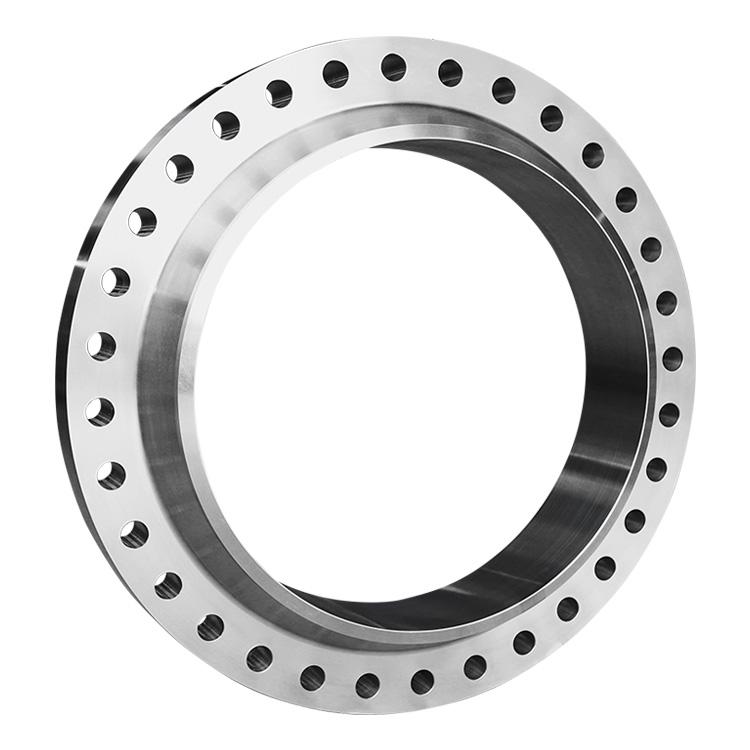
A Precision Industrial Flange is a high-accuracy mechanical connection component designed to join pipes, tubes, valves, pumps, machinery parts, and structural assemblies with stable alignment, leak resistance, and repeatable performance. In industrial assembly systems, precision flanges are widely used because they support controlled positioning, strong load transfer, and dependable sealing under demanding operating conditions. For factories, processing plants, automation lines, energy systems, and heavy-duty equipment, the precision of a flange directly affects assembly efficiency, system reliability, maintenance intervals, and long-term operating cost.
Compared with standard connection parts, a precision industrial flange is manufactured with tighter dimensional tolerances, improved flatness, more accurate hole patterns, and better surface quality. These characteristics make it suitable for applications where alignment, vibration resistance, pressure control, and repeatable installation matter. In modern industrial assembly systems, precision flange solutions help reduce leakage risk, improve mechanical stability, and simplify maintenance. As a result, they are an essential component in industries that demand high performance and consistent quality.
A precision industrial flange is a specially manufactured flange designed to meet strict dimensional and performance requirements. It is typically used as a joining interface between two mechanical elements. The flange may be welded, threaded, slip-on, blind, socket-weld, or custom-machined depending on the application. What makes it “precision” is the tighter control of critical measurements such as outer diameter, inner diameter, bolt circle, thickness, concentricity, face flatness, and hole location accuracy.
In industrial assembly systems, these flanges are not only connectors; they are alignment-critical components. A small error in flange geometry can create stress concentration, gasket failure, uneven load distribution, or assembly misfit. Precision manufacturing reduces these risks and improves the reliability of the entire system. This is why precision industrial flanges are commonly selected for high-pressure lines, automated machinery, rotating equipment, fluid transfer systems, and modular industrial assemblies.
Industrial assembly systems depend on repeatable positioning and stable mechanical interfaces. When a connection component is out of tolerance, even slightly, it can lead to downtime, excessive wear, vibration, leakage, and frequent rework. Precision industrial flanges help solve these issues by ensuring accurate fit and secure joining.
In a large-scale production environment, every assembly step must be efficient. Precision flanges reduce installation time because parts fit more consistently. They also support standardized assembly processes, which is critical in automated production lines and modular system design. The result is higher productivity, lower failure rates, and better long-term performance.
Precision industrial flanges are used across a wide range of sectors. Their function is similar in most cases: connect components securely while maintaining alignment, sealing integrity, and structural strength. However, the operating environment changes from one industry to another, and flange material, geometry, and finishing must be selected accordingly.
| Industry | Typical Use of Precision Industrial Flange | Key Performance Requirement |
|---|---|---|
| Oil and Gas | Pipelines, pressure systems, valve assemblies | Leak resistance, pressure endurance, corrosion resistance |
| Chemical Processing | Reactor connections, transfer lines, pump interfaces | Chemical compatibility, sealing reliability |
| Power Generation | Turbine systems, cooling lines, fluid transport | Heat resistance, structural integrity |
| Manufacturing Automation | Machine frames, modular assemblies, equipment mounts | Dimensional consistency, repeatable installation |
| Food and Beverage | Sanitary piping, process equipment, hygiene systems | Cleanability, smooth surface finish, corrosion resistance |
| Pharmaceutical | Sanitary assemblies, sterile transfer systems | High cleanliness, precision fit, contamination control |
| Water Treatment | Filtration units, pumps, pipe networks | Durability, sealing performance, maintenance ease |
| Heavy Machinery | Structural connections, rotating assemblies, hydraulic systems | Load-bearing strength, vibration control |
The main advantage of a precision industrial flange is that it improves connection quality while reducing operational problems. In industrial assembly systems, this translates into better production outcomes and lower maintenance demands.
Precision flanges support accurate alignment between connected parts. This is particularly important for equipment that must maintain concentricity, rotation balance, or flow consistency. Accurate alignment reduces assembly stress and helps the system operate more smoothly.
Many industrial systems rely on flange connections to contain liquids, gases, or process materials. Precision machining improves face flatness and bolt-hole consistency, which helps gaskets compress evenly. This reduces leakage risk and improves system safety.
When flange surfaces are accurate, mechanical loads distribute more evenly across the joint. This reduces localized stress and improves fatigue resistance. In high-vibration or high-pressure applications, balanced load distribution is especially valuable.
Precision components fit more reliably, which speeds up installation and reduces rework. In production environments where time matters, this can improve throughput and lower labor cost.
Flanges with consistent geometry are easier to inspect, remove, reinstall, and replace. Maintenance teams benefit from standardized interfaces and more predictable performance across multiple units or systems.
Because precision flanges reduce stress, leakage, and misalignment, they contribute to a longer service life for both the flange itself and the connected equipment.
Precision industrial flanges are available in several structural forms. The best choice depends on pressure rating, media type, assembly method, and maintenance requirements.
| Flange Type | Description | Common Use |
|---|---|---|
| Weld Neck Flange | Features a long tapered hub and welded attachment for high strength | High-pressure and high-temperature systems |
| Slip-On Flange | Slides over the pipe and is welded in place | General industrial piping |
| Blind Flange | Used to close the end of a piping system or vessel opening | Pressure testing and system closure |
| Threaded Flange | Connected by threading rather than welding | Low-welding environments and smaller lines |
| Socket Weld Flange | Pipe inserts into a socket before welding | Small-diameter, high-integrity lines |
| Lap Joint Flange | Used with a stub end for easy alignment and disassembly | Frequent maintenance applications |
| Custom Machined Flange | Designed to specific dimensions or special interfaces | Special equipment and OEM assemblies |
Material selection is one of the most important factors in flange performance. The correct material depends on temperature, corrosion exposure, pressure load, hygiene needs, and cost target. In industrial assembly systems, material compatibility with the connected medium is essential.
| Material | Main Advantages | Typical Applications |
|---|---|---|
| Carbon Steel | Strong, economical, widely available | General industrial piping, structural systems |
| Stainless Steel | Corrosion resistant, hygienic, durable | Food, pharmaceutical, chemical, water systems |
| Alloy Steel | Enhanced strength and heat resistance | High-temperature and high-pressure environments |
| Aluminum | Lightweight, easy to machine, corrosion resistant in some environments | Light-duty equipment and precision assemblies |
| Brass / Bronze | Good machinability and moderate corrosion resistance | Special fittings and fluid systems |
| Nickel Alloys | Excellent chemical and heat resistance | Aggressive process media, extreme environments |
When selecting a precision industrial flange, engineers usually review a set of key specifications. These parameters determine whether the flange can meet the demands of the assembly system and the operating environment.
| Specification | What It Means | Why It Matters |
|---|---|---|
| Nominal Size | Standardized size designation for the flange | Ensures compatibility with connected components |
| Pressure Rating | Maximum pressure level the flange can withstand | Determines suitability for system pressure |
| Temperature Range | Allowable operating temperature limits | Affects safety and material stability |
| Face Type | Raised face, flat face, ring-type joint, and others | Influences sealing performance |
| Bolt Circle Diameter | Diameter of the bolt hole pattern | Ensures proper assembly and load distribution |
| Number of Bolt Holes | Total holes used for fastening | Impacts clamping strength and installation pattern |
| Flange Thickness | Material thickness across the flange body | Supports mechanical strength and pressure resistance |
| Flatness Tolerance | Maximum allowed surface deviation | Affects gasket sealing and connection accuracy |
| Concentricity | How closely the center features align | Important for smooth fit and reduced stress |
| Surface Finish | Quality of the machined sealing or contact surface | Influences sealing, friction, and cleanliness |
Industrial flanges are often produced according to recognized dimensional and material standards. Standards help ensure interchangeability, safety, and compatibility across global supply chains. Depending on the region and industry, different standards may apply.
| Standard Type | Purpose | Typical Region or Use |
|---|---|---|
| ASME / ANSI | Defines dimensions and pressure classes for many pipe flanges | North America and international industrial systems |
| DIN | European dimensional and pressure-related flange standards | European industrial applications |
| EN | Harmonized European engineering standards | EU-based projects and equipment |
| JIS | Japanese industrial standards for dimensions and pressure classes | Japanese and Asia-Pacific systems |
| ISO | International standardization for many industrial requirements | Global engineering and OEM use |
In industrial assembly systems, every interface must function with predictable accuracy. Precision industrial flanges contribute to this by creating a stable and repeatable connection point. They help maintain geometry, reduce movement at the joint, and support consistent clamping force.
These benefits are especially important in systems that include pumps, compressors, conveyors, modular skids, machine tooling, fluid manifolds, and automated production equipment. Because assembly systems often require repeated disassembly and reassembly, the reliability of the flange interface becomes essential. A precision flange helps preserve system integrity after many installation cycles.
The performance of a precision industrial flange depends not only on the material but also on manufacturing quality and design execution. Several factors influence the final result.
| Performance Factor | Effect on the Flange | Result in the Assembly System |
|---|---|---|
| Machining Accuracy | Affects hole positioning, thickness, and face geometry | Improves fit and reduces installation error |
| Surface Quality | Influences sealing and friction | Reduces leakage and wear |
| Material Integrity | Affects strength and fatigue resistance | Improves long-term reliability |
| Heat Treatment | Can increase hardness or toughness | Supports demanding operating conditions |
| Coating / Protection | Improves corrosion resistance or wear resistance | Extends service life in harsh environments |
| Inspection Control | Verifies dimensions and finish before shipment | Ensures consistent production quality |
Precision industrial flanges are typically produced through a combination of forging, casting, machining, heat treatment, and finishing. The exact process depends on the required strength, geometry, and cost target. High-precision applications often require additional machining operations to achieve strict tolerance levels.
Common manufacturing steps may include raw material preparation, cutting, rough machining, finish machining, drilling, boring, thread processing, surface finishing, inspection, and packaging. Each step affects final accuracy. In high-performance industrial assembly systems, tighter process control generally leads to better flange consistency and more reliable installation.
Quality control is essential for precision flange products. Because these components are used in critical assemblies, dimensional errors or surface defects can lead to failure. Common inspection methods include coordinate measurement, gauge testing, visual inspection, hardness testing, surface roughness testing, and pressure or leak verification when required.
| Inspection Method | Purpose | What It Verifies |
|---|---|---|
| Dimensional Measurement | Checks size and geometry | Diameter, thickness, bolt pattern, concentricity |
| Surface Roughness Test | Measures surface texture | Sealing surface quality |
| Flatness Inspection | Checks face deviation | Gasket compatibility and sealing performance |
| Hardness Test | Evaluates material hardness | Wear resistance and strength |
| Visual Examination | Detects surface flaws | Cracks, burrs, scratches, defects |
| Pressure / Leak Test | Validates sealing under operating conditions | Connection integrity and safety |
Choosing the right precision industrial flange requires balancing mechanical requirements, environmental exposure, and system compatibility. A flange that works well in one system may be unsuitable in another if pressure, temperature, chemical exposure, or installation method changes.
Key selection considerations include operating pressure, operating temperature, media type, required sealing class, corrosion exposure, installation space, maintenance frequency, and applicable standards. Engineers should also consider whether the system needs a standard flange or a custom-machined design. In industrial assembly systems, selecting the right flange can improve uptime and reduce total ownership cost.
Even a well-made precision flange requires proper installation and maintenance. Incorrect torque, poor gasket selection, dirty sealing surfaces, or mismatched materials can reduce performance. Best practices help preserve accuracy and connection quality.
For industrial blogs, product category pages, and technical directory pages, the term Precision Industrial Flange is a strong keyword phrase because it combines a product type with a high-intent industrial application. Related search phrases such as industrial flange, precision flange, industrial assembly systems, high-accuracy flange, custom flange, and metal flange for industrial use can help build topical relevance.
Content that explains definitions, applications, advantages, specifications, standards, and material options is highly useful for search engines because it addresses user intent in a structured way. Pages with clear headings, tables, and semantically relevant terms often perform better in organic search. For this reason, a precision flange page should include practical information that helps engineers, procurement teams, and technical buyers understand the product without needing promotional language.
A precision flange is defined by tighter control of dimensions, better surface accuracy, and improved consistency in manufacturing. This increases fit, sealing quality, and reliability.
No. While piping is a common use, precision flanges are also used in machinery, modular assembly systems, pumps, valves, process equipment, and structural interfaces.
The best material depends on the application. Stainless steel is common for corrosion resistance, carbon steel for general strength and cost efficiency, and alloy materials for demanding environments.
Yes. Better flatness, hole alignment, and surface finish help gaskets compress more evenly, which improves sealing performance.
Yes. Many industrial systems require custom dimensions, special bolt patterns, unique face designs, or application-specific materials.
Precision Industrial Flange for Industrial Assembly Systems is a core engineering topic for modern manufacturing, process infrastructure, and equipment design. Precision flanges provide reliable alignment, strong sealing, improved load distribution, and easier installation. Their value comes from accurate machining, proper material selection, and consistent quality control. Whether used in piping networks, automation equipment, or heavy-duty industrial assemblies, precision industrial flanges help support safer operation, lower maintenance, and longer service life.
For industry pages, blog articles, and technical directories, this topic offers strong SEO potential because it covers a clear product type, commercial intent, and highly relevant technical subtopics. A well-structured precision flange page with detailed explanations, tables, and keyword-rich headings can attract both search engines and professional readers looking for dependable industrial information.


저작권 © 2022 Zhejiang Songlin Flange Co., Ltd.
사이트 맵이 웹사이트는 귀하가 당사 웹사이트에서 최상의 경험을 할 수 있도록 쿠키를 사용합니다.

 English
 Español
 Pусский
 Français
 Deutsch
 日本語
日本語 العربية
 Italiano
 Nederlands



 왓츠앱
왓츠앱 핸드폰
핸드폰
논평
(0)