
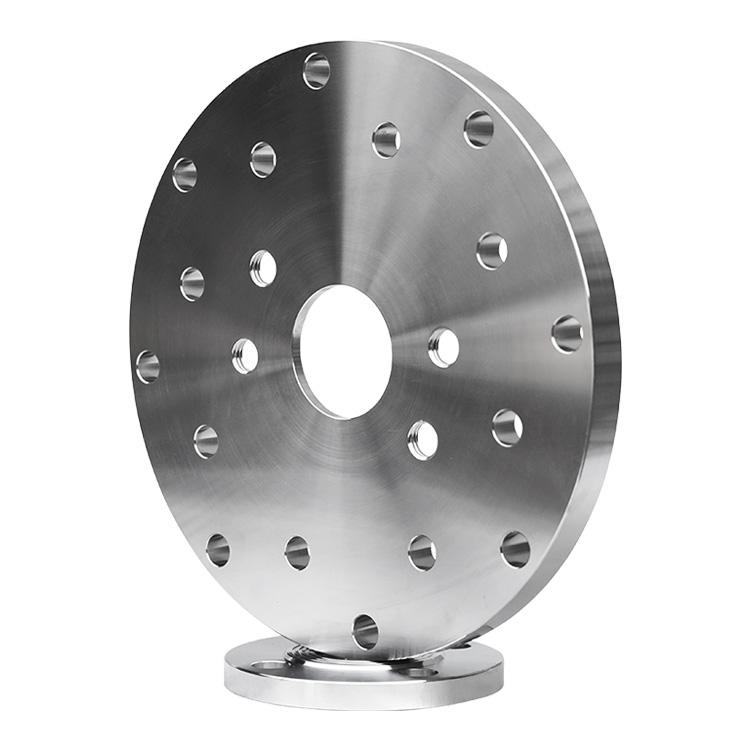
A welded slip-on flange for pipeline construction use is one of the most widely used flange types in
piping systems, pipeline fabrication, and industrial fluid transport projects. It is designed to slide over the
outside diameter of a pipe and then be welded in place, creating a secure and practical connection point for
pipelines, valves, pumps, pressure equipment, and related assemblies. Because of its simple structure, easy
installation, and cost-effective performance, the welded slip-on flange is commonly selected for many pipeline
construction applications where speed, alignment convenience, and reliable service are important.
In modern pipeline engineering, flange selection affects not only connection integrity but also installation
efficiency, maintenance access, pressure containment, and long-term operating cost. The welded slip-on flange
remains a preferred option across many industries due to its balance of usability and performance. It is especially
common in low-pressure to medium-pressure systems, utility pipelines, water transmission, process piping,
petrochemical infrastructure, and general industrial piping networks.
This page provides original, SEO-friendly, industry-generic information about the welded slip-on flange,
including definition, working principle, advantages, common standards, typical dimensions, material options, surface
treatments, applications, inspection points, and selection considerations. It is written for use in blog posts,
category pages, product landing pages, industry pages, and technical content sections.
A welded slip-on flange, often shortened to SO flange or slip-on flange, is a
flange that slips over the pipe and is then attached by fillet welding on one or both sides. The flange has a
bore that is slightly larger than the pipe’s outside diameter, allowing the pipe to slide into the flange before
welding. This design makes installation easier than some other flange types that require more exact pipe-end
preparation.
In pipeline construction, the welded slip-on flange is used to create a detachable bolted joint. Once welded to the
pipe, it can be connected to another flanged component using bolts and a gasket. This allows the pipeline section to
be assembled, disassembled, inspected, maintained, or expanded as needed.
The welded slip-on flange is valued for its straightforward geometry and practical installation. Compared with
welding neck flanges, it generally requires less precise pipe cutting and alignment. Compared with threaded
connections, it offers better sealing capability and stronger mechanical integrity for many service conditions.
Pipeline construction demands components that are easy to fabricate, easy to install, and dependable in operation.
The welded slip-on flange is widely used because it meets these requirements efficiently. During construction,
contractors often need to join pipe sections quickly while maintaining correct flange orientation. The slip-on design
helps reduce installation difficulty, which can improve productivity on site and in fabrication shops.
Another important reason for using a welded slip-on flange in pipeline construction is cost control. In many
projects, especially large-scale piping networks, material cost and labor time are key factors. Slip-on flanges are
generally less expensive than some specialized flange types and are easier to position before welding. This makes
them an attractive choice for projects where budget, schedule, and practicality all matter.
These flanges are also used because they are versatile. They can be manufactured in many sizes, pressure classes,
materials, and facing styles, making them suitable for a broad range of pipeline construction use cases.
The operation of a welded slip-on flange is simple. The pipe is inserted through the flange bore until it reaches
the required position. The flange is then aligned, and fillet welds are applied around the outside and often the
inside as well, depending on design requirements and applicable codes. After welding, the flange becomes a fixed
part of the pipe assembly.
When two flanges are connected in the pipeline, a gasket is placed between the facing surfaces and bolts are
tightened to create a sealed joint. The gasket helps prevent leakage, while bolt preload provides the clamping force
needed to maintain pressure integrity.
In practical pipeline construction, the slip-on flange offers a good combination of installation tolerance and
structural reliability. Because the flange slides over the pipe, it is easier to rotate into the correct position
before final welding, which can be useful in field assembly and prefabrication work.
| Advantage | Description | Pipeline Construction Benefit |
|---|---|---|
| Easy installation | The flange slides over the pipe, simplifying alignment and assembly. | Reduces fabrication time and installation complexity. |
| Cost-effective | Generally more economical than some alternative flange types. | Helps control project material and labor costs. |
| Flexible application | Available in multiple sizes, pressure ratings, and materials. | Suitable for a wide range of pipeline systems. |
| Good sealing performance | Works with gaskets and bolted joints to create reliable sealing. | Supports leak-resistant pipeline operation. |
| Convenient orientation | Can be rotated before final welding for easier bolt-hole alignment. | Improves field installation efficiency. |
| Broad availability | Commonly produced to major international standards. | Makes sourcing and replacement easier. |
| Maintenance-friendly | Bolted flange joints can be opened for service and inspection. | Supports future maintenance and system modifications. |
These advantages explain why the welded slip-on flange remains a popular choice in pipeline construction projects.
For many applications, it provides the right balance of simplicity, reliability, and economy.
The welded slip-on flange is used in many industries and pipeline environments. Its application range is broad
because it works well in systems that require detachable connections and straightforward fabrication. Common uses
include:
In pipeline construction, slip-on flanges are often selected for systems that do not require the higher weld integrity
of a weld neck flange but still need a dependable bolted connection. They are especially common where fabrication
speed and practical handling are important.
Welded slip-on flanges are typically manufactured according to recognized piping standards. These standards define
dimensions, pressure ratings, facing types, tolerances, and testing requirements. The exact standard used depends
on project location, industry requirements, and governing design code.
| Standard / Code | Typical Use | Notes |
|---|---|---|
| ASME B16.5 | Pipe flanges and flanged fittings up to certain sizes and pressure classes | Commonly used in North America and international projects |
| ASME B16.47 | Large-diameter steel flanges | Used for larger pipeline and process systems |
| EN 1092-1 | European standard for flanges | Common in European and global industrial projects |
| DIN standards | Legacy and regional European piping systems | Still referenced in many installations |
| JIS standards | Japanese industrial and pipeline applications | Used in regional and export-oriented systems |
| GB standards | Chinese industrial pipeline systems | Applied in many domestic projects and export fabrication |
Pressure class is another key specification. In ASME-based systems, common classes include 150, 300, 600, 900,
1500, and 2500. In other standards, pressure designations may use PN ratings such as PN6, PN10, PN16, PN25, PN40,
and higher depending on the system.
Actual dimensions vary according to standard, nominal pipe size, pressure class, and facing type. The table below
provides a general guide to common dimensional elements used in pipeline construction planning.
| Dimension Element | Meaning | Why It Matters |
|---|---|---|
| Nominal Pipe Size (NPS) | Common pipe size designation used for flanges and piping components | Ensures compatibility with the pipe system |
| Outside Diameter (OD) | The external diameter of the mating pipe | Determines slip-on fit and weld preparation |
| Bore Diameter | Inside opening of the flange | Must match pipe OD clearance requirements |
| Flange Outer Diameter | Total outside diameter of the flange body | Affects bolt circle and load distribution |
| Bolt Circle Diameter | Diameter of the circle passing through bolt holes | Controls bolting alignment |
| Bolt Hole Count | Number of bolt holes in the flange | Influences joint strength and assembly |
| Flange Thickness | Thickness of the flange body | Relates to pressure capability and rigidity |
| Facing Type | Raised face, flat face, ring-type joint, or other configuration | Directly affects sealing method |
When selecting a welded slip-on flange, engineers must verify the compatibility of all dimensional parameters with
the pipe, gasket, bolts, and mating flange. Even small dimensional mismatches can affect sealing and assembly.
The welded slip-on flange is manufactured across a wide size range. While availability depends on standard and
material, the following table shows common industry practice.
| Category | Typical Range | Notes |
|---|---|---|
| Nominal sizes | From small bore piping to very large pipeline diameters | Exact range depends on the governing standard |
| Pressure class | ASME 150, 300, 600, 900, 1500, 2500 | Used for pressure design and selection |
| PN class | PN6, PN10, PN16, PN25, PN40, and other ratings | Common in metric and European standards |
| Temperature range | Depends on material and design code | Material selection is critical for elevated or low-temperature service |
| Service type | Water, oil, gas, steam, chemical, and general utilities | Must match process conditions and corrosion environment |
Material selection is one of the most important factors in pipeline construction use. The flange material must suit
the fluid medium, pressure, temperature, corrosion risk, fabrication method, and project code requirements. Common
materials include carbon steel, stainless steel, alloy steel, duplex stainless steel, and other special metal grades.
| Material Type | Key Characteristics | Typical Pipeline Use |
|---|---|---|
| Carbon steel | Strong, economical, widely available | General utility, oil, gas, water, industrial piping |
| Stainless steel | Good corrosion resistance and cleanability | Food, chemical, marine, water treatment, hygienic systems |
| Alloy steel | Improved mechanical performance for demanding conditions | High-temperature or high-pressure service |
| Duplex stainless steel | High strength and strong resistance to corrosion | Offshore, chemical, and aggressive environments |
| Nickel alloy / special alloy | Superior resistance to severe corrosion or temperature extremes | Specialized industrial and process applications |
For pipeline construction use, carbon steel slip-on flanges are among the most common because they offer a
practical combination of strength, weldability, and cost efficiency. Stainless steel flanges are used where corrosion
resistance is a higher priority.
Flange facing refers to the surface finish and geometry of the sealing face. The chosen facing type must match the
gasket and the pressure class of the pipeline system. Common facing types include:
In many welded slip-on flange applications, the raised face is the most common choice. However, project design,
pressure class, and gasket type should always guide the final selection.
Correct welding is essential for the performance of any welded slip-on flange. Although the flange design is simple,
installation quality directly affects the integrity of the pipeline connection. The flange is usually welded using
fillet welds, and the exact procedure depends on the applicable code, pipe material, service conditions, and
fabrication requirements.
Important installation points include:
In pipeline construction use, proper fit-up is especially important. A poorly aligned flange can cause assembly
problems, sealing failure, or stress concentration in the connection area.
| Flange Type | Main Feature | Typical Advantage | Typical Limitation |
|---|---|---|---|
| Welded slip-on flange | Slides over pipe and is welded in place | Easy installation and economical | Lower structural efficiency than some other flange types |
| Weld neck flange | Long tapered hub with butt weld connection | Excellent fatigue and pressure performance | Higher cost and more demanding fabrication |
| Threaded flange | Connects by internal thread | No welding required | Less suitable for many high-pressure systems |
| Blind flange | Used to close pipe ends or openings | Simple closure function | Not used for through-flow connections |
| Socket weld flange | Pipe inserts into a socket before welding | Good for small-diameter piping | More limited in size range |
This comparison shows why the welded slip-on flange is often selected when simplicity, affordability, and practical
installation are the main priorities. It is not always the best choice for the most severe service conditions, but it
is highly effective in many routine pipeline construction scenarios.
To ensure reliable performance, welded slip-on flanges should be inspected and tested according to the project code
and quality plan. Common quality checks may include dimensional inspection, visual examination, weld inspection,
surface finish verification, and pressure testing of the assembled pipeline section.
| Inspection Item | Purpose | Typical Check |
|---|---|---|
| Dimensional inspection | Confirms compliance with standard dimensions | Bore, bolt circle, thickness, and facing |
| Visual inspection | Identifies surface defects or weld issues | Cracks, undercut, spatter, misalignment |
| Weld inspection | Assesses weld quality and integrity | Fillet weld quality, penetration, and continuity |
| Surface finish check | Ensures proper sealing face condition | Face smoothness and machining quality |
| Hydrostatic or pressure test | Validates pressure containment | Leak-free performance under test conditions |
Proper inspection supports long-term pipeline reliability and helps reduce the risk of leakage, downtime, and
maintenance issues after commissioning.
Surface protection can improve corrosion resistance, extend service life, and enhance the appearance of welded
slip-on flanges. Common finishing and coating options include black coating, anti-rust oil, galvanized finishes,
epoxy coatings, and other protective systems depending on service environment.
Surface treatment is particularly important in pipeline construction use when the flanges are exposed to humidity,
marine atmospheres, outdoor storage, or corrosive media. The chosen finish should be compatible with welding,
assembly, and long-term service requirements.
Choosing the right welded slip-on flange requires attention to several engineering and project factors. The
following considerations are commonly used in pipeline construction planning:
A well-chosen welded slip-on flange can simplify pipeline construction while supporting safe and efficient system
operation. In contrast, an incorrect selection may lead to sealing problems, reduced service life, or unnecessary
installation effort.
Fabrication shops often favor welded slip-on flanges because they are practical to handle, easy to position, and
efficient to weld. The flange can be slipped over the pipe, rotated into alignment, and then fixed in place. This
helps reduce fitting time and can improve productivity in shop-based prefabrication.
Field installation teams also benefit from the slip-on design because it tolerates minor alignment adjustments before
final welding. In construction environments where time, access, and working conditions can be challenging, this
flexibility is valuable.
For pipeline construction use, these practical advantages often translate into lower labor intensity and smoother
assembly workflows.
The performance of a welded slip-on flange does not depend on the flange alone. The gasket, bolts, nuts, and mating
flange surface are all part of the joint system. Proper gasket selection helps ensure sealing performance, while bolt
quality and tightening method affect clamp load and leak resistance.
| Joint Component | Role in the Flanged Connection | Selection Consideration |
|---|---|---|
| Gasket | Provides the sealing barrier between flange faces | Must match face type, fluid, pressure, and temperature |
| Bolts and nuts | Supply clamping force for sealing | Material grade and strength must suit service conditions |
| Flange faces | Contact surfaces for the gasket | Need proper finish and alignment |
| Lubrication / anti-seize | Helps achieve consistent bolt preload | Should be compatible with project specifications |
The following keyword phrases are commonly associated with this topic and may be naturally included in page content
for SEO purposes:
Using these phrases naturally throughout headings, body text, tables, and supporting sections can improve topical
relevance for search engines without sacrificing readability.
A welded slip-on flange is used to create a bolted, detachable connection in pipeline systems. It is common in
construction, fabrication, and industrial piping where simple installation and reliable sealing are needed.
Yes. A welded slip-on flange is a practical choice for many pipeline construction projects because it is easy to
install, economical, and adaptable to different pipe sizes and pressure classes.
A slip-on flange slides over the pipe and is fillet welded, while a weld neck flange has a long hub and is butt
welded to the pipe. Weld neck flanges are usually stronger for severe service, while slip-on flanges are simpler and
more cost-effective.
Common materials include carbon steel, stainless steel, alloy steel, duplex stainless steel, and special alloys
depending on the service environment and project requirements.
They can be used in many pressure systems, but suitability depends on the design code, pressure class, material,
temperature, and service conditions. For the most demanding conditions, another flange type may be preferred.
The welded slip-on flange for pipeline construction use remains an essential component in modern
piping and pipeline systems. Its straightforward design, convenient installation, broad availability, and cost
efficiency make it a reliable solution for many industrial projects. Whether used in water pipelines, oil and gas
infrastructure, process systems, or utility networks, the slip-on flange offers a practical way to create secure,
maintainable flanged joints.
For engineers, contractors, and procurement teams, understanding the definition, advantages, standards, materials,
dimensions, and installation requirements of the welded slip-on flange is important for successful project
execution. When correctly selected and properly installed, it can provide dependable performance and long service
life in a wide range of pipeline construction applications.
As a result, the welded slip-on flange continues to be one of the most commonly specified flange solutions in the
pipeline industry, especially where efficiency, compatibility, and practical field assembly are priorities.
```


저작권 © 2022 Zhejiang Songlin Flange Co., Ltd.
사이트 맵이 웹사이트는 귀하가 당사 웹사이트에서 최상의 경험을 할 수 있도록 쿠키를 사용합니다.

 English
 Español
 Pусский
 Français
 Deutsch
 日本語
日本語 العربية
 Italiano
 Nederlands



 왓츠앱
왓츠앱 핸드폰
핸드폰
논평
(0)